What a year of gardening with AI taught me about experience, judgement and Brussels sprouts
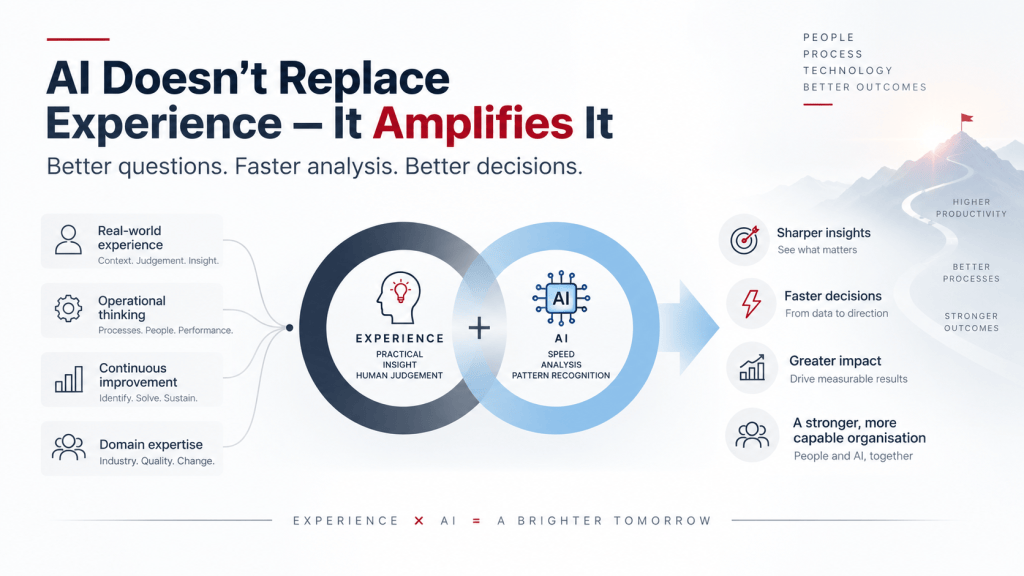
In September I wrote that AI doesn’t replace experience, it amplifies it. I stand by that. But I’ve since realised I’d been running the experiment in my own back yard without calling it one.
Over the past year the Upper Moutere orchard has grown by a few plum trees, an apricot (two, if you count the second Moorpark, which I do), a fruit cage and a strawberry bed. I’ve also had an AI assistant on call, available at all hours and never once tutting at my questions.
What it’s good at
It’s excellent at standard work. Fertiliser timings, spray programmes and seasonal schedules turn out to be a documentation problem, and AI loves a documentation problem. The orchard plan is now a versioned document, and I have reminders that actually fire. After 30 years of preaching standard work to manufacturers, it was a little humbling to find my own orchard had none.
It’s also good at asking “what stage are the buds at?” instead of “what’s the date?” Good orchard management follows the tree, not the calendar, and that’s just Lean’s “go and see” with blossom on it.
What it can’t do
It has never had wet socks. It can’t smell the soil, feel how heavy the clay is, or notice that something is off about a tree from ten metres away. That’s the gemba, and I’m the one standing in it.
Case in point: I was convinced the young whip next to the established Billington was a second Billington. Clearly it wasn’t. It was a Black Doris. The AI worked from what I told it, so it was happily planning for the wrong plum. Garbage in, plum out. The correction came from me looking at the tree properly, and that’s a useful reminder that these tools are only as good as the observations you feed them.
The Brussels sprout incident
This spring my Brussels sprouts bolted to flower without forming a single sprout. We had a post-mortem, which is the polite word for it. The AI offered plausible causes; I supplied the context it couldn’t see. We’ve agreed a countermeasure for next season, which is Plan-Do-Check-Act with a trowel. The sprouts remain unconvinced.
Four lessons for the rest of us
- Garbage in, garbage out. Your observations are the input. Take better photos and describe things accurately.
- Let it hold the plan. Schedules, reminders and records are where AI saves real time.
- Keep the judgement. It will give a confident answer to a question you didn’t quite ask. Check it against what’s actually in front of you.
- Treat failures as data. The sprouts didn’t fail; they gave us information.
The bigger point
There’s a strong parallel with what I see in business. The organisations getting value from AI aren’t the ones that hand over the keys. They’re the ones where someone with real experience stays in the loop, goes to see for themselves, and asks the better question.
AI can write the spray schedule. It still takes a human in gumboots to notice it’s raining.
How are you using AI in the real world, away from the keyboard? I’d love to hear about it.
Richard Steel works with organisations on productivity, process improvement and capability development. For current work and practical insights, visit RichardSteel.co.nz.



Leave a Reply